
Holding a phone while driving is illegal. That is the whole rule in one sentence. The mobile phone driving law bans holding and using a phone, sat nav, tablet, or any data device. It applies for any reason, online or offline.
Texting counts. Calls count. Photos, videos, and browsing count. Checking the time on a held phone is still holding and using it. The law does not ask why you picked it up.
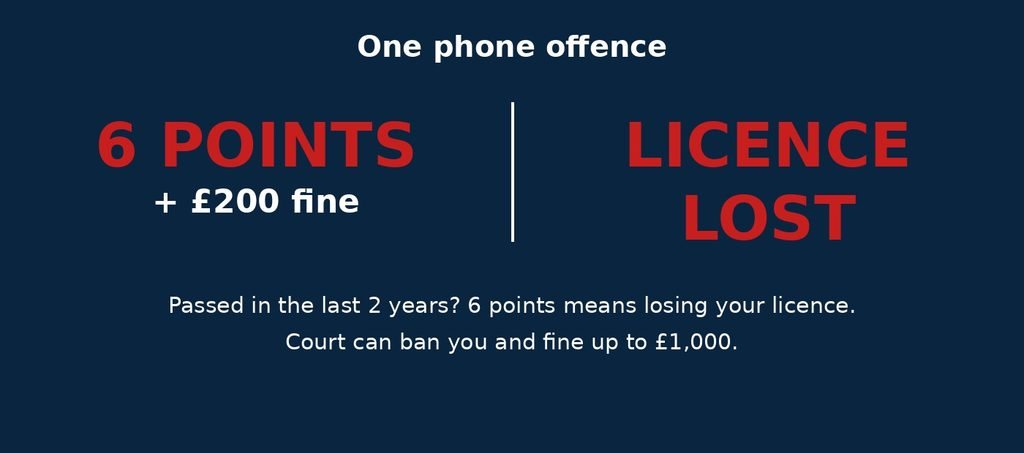
For new drivers, the stakes are higher. One offence brings 6 penalty points and a £200 fine. Pass your test within the last 2 years, and those 6 points mean losing your licence. One glance at a phone can end your driving.
This guide explains the law in plain terms. It covers where the ban applies, the four exceptions, and hands-free limits. It also explains the penalties new drivers face. Everything here is checked against GOV.UK and the Highway Code. Bolton learners can apply every rule below on local roads today.
“I was only stopped at the lights”
This is the excuse instructors hear most. It fails. The law still applies when you are stopped at traffic lights. It also applies while queuing in traffic. Stationary in a queue is still driving in law.
Stop-start cars change nothing. The law applies even when the engine cuts out. Flight mode changes nothing either. Offline devices are covered exactly like online ones. Rule 149 says the ban applies even when the capability is turned off.
Supervising a learner counts too. The ban covers driving and supervising a learner driver. Parents in the passenger seat cannot hold a phone either. Our supervising a learner guide covers the supervisor side in full.
Even picking the phone up briefly is banned. Rule 149 forbids picking it up to dial, then cradling it. It also forbids picking it up while stationary in traffic. The phone stays untouched until you are safely parked.
The only exceptions
GOV.UK lists four exceptions. You may hold a device to call 999 or 112 in an emergency. That applies only when stopping is unsafe or impractical. A genuine emergency is the test, not convenience.
You may use a held device when safely parked. Parked means properly parked, not paused in traffic. You may also make a contactless payment in a stationary vehicle. Drive-through payments are the usual example.
Remote parking is the fourth exception. You may use a device to park your vehicle remotely. Rule 149 adds that the app must be legal. You must not put other people in danger while using it.
Notice how narrow these exceptions are. None covers checking messages at red lights. None covers filming traffic for social media. If your reason is not listed, it is not allowed.
Instructors see the parked exception misunderstood often. Learners stop on a side street with the engine running. Then they pick up the phone while still in traffic flow. The mobile phone driving law treats safely parked as properly parked. If traffic is still moving around you, treat yourself as driving.
Hands-free: legal, but not risk-free
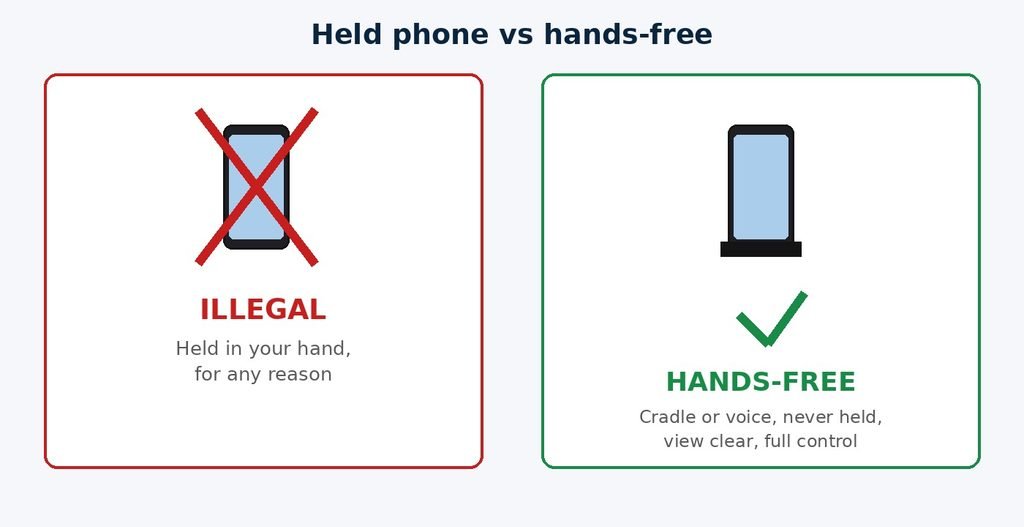
Hands-free use is allowed with conditions. You must not hold the device at any time during use. Bluetooth headsets and voice commands qualify. Dashboard holders, windscreen mounts, and built-in sat navs qualify too.
Two limits still apply. The device must not block your view of the road ahead. You must stay in full control of the vehicle at all times. Police can stop and prosecute distracted drivers. That applies even with a legal hands-free setup.
Rule 149 is honest about hands-free. It says hands-free equipment is also likely to distract you. It calls stopping safely the far safer choice. Voicemail exists for a reason. Messages can wait until you park.
Rule 150 widens the warning. Sat navs, multimedia screens, and driver assistance can all distract. You must exercise proper control at all times. Do not be distracted by maps or screen information. Find a safe place to stop if you need the screen.
Sat nav discipline matters on test too. Examiners set the route during independent driving. You follow directions without touching the device. Our independent driving tips explain how that section works.
Cradle position deserves a minute of thought. Mount the phone low and clear of your eyeline. A screen blocking the road ahead breaks the view rule. Voice directions beat screen reading every time. Set the volume so you rarely need to look.
The penalties in full
Holding and using a device brings 6 penalty points. It also brings a £200 fine. Those figures come straight from GOV.UK. There is no warning-first stage for new drivers.
Passed within the last 2 years? You lose your licence. Six points in your first 2 years means revocation. You then reapply and retake your tests. That is the new-driver trap in the mobile phone driving law.
Other penalties sit alongside. You can get 3 penalty points for lacking a full view of the road. The same applies without proper control of the vehicle. A phone cradle blocking your windscreen view can trigger that.
Court can go further. You can be banned from driving. Fines can reach £1,000 for car drivers. Lorry and bus drivers face up to £2,500. One held phone can carry all of that.
New drivers should read those figures twice. Passing your test starts a 2-year probation window. Six points inside that window revokes your licence. Revocation means starting again with theory and practical tests. Months of lessons and test fees sit behind that one decision.
Habits that keep you legal
Set everything before you move. Enter the sat nav destination while parked. Choose your playlist before the engine starts. Then put the phone in its cradle or out of reach.
Use Do Not Disturb while driving. Most phones silence notifications automatically in cars. That removes the buzz that tempts a glance. Tell regular callers you reply after parking.
Need the phone mid-journey? Park safely first. Find a legal, safe place to stop. Then use the phone freely. Thirty seconds of parking beats 6 points.
At lights, keep hands on the wheel. Our amber light guide covers the stop-line decision. Phones at lights break two rules at once. The mobile phone driving law still applies there.
Make the car a phone-free zone by default. Put the phone in the glovebox on short trips. Short trips tempt quick checks the most. Bolton town-centre queues feel harmless, but the law disagrees. Distance from the phone removes the temptation entirely.

Phone law questions learners ask
These mobile phone driving law questions come up in lessons often. The short answers below match GOV.UK and the Highway Code.
Can I check my phone at red lights?
No. The law applies at traffic lights and in queues. Holding the phone there is still an offence. Wait until you are safely parked.
Can I use my phone as a sat nav?
Yes, hands-free in a proper mount. You must never hold it during use. It must not block your view ahead.
What if my phone is in flight mode?
The ban still applies. Offline and flight-mode use are covered. Rule 149 covers devices with capability turned off.
Can I pay at a drive-through with my phone?
Yes. Contactless payment in a stationary vehicle is allowed. The vehicle must not be moving. Goods or services come at the same time or after.
Does the law apply to passengers supervising me?
Yes. Supervising a learner is covered by the ban. Your supervisor cannot hold a phone either. Hands-free rules apply to them as well.
What happens if I passed last year?
One phone offence means 6 points. Six points in your first 2 years means licence loss. You would need to retake your tests.
Build phone-free habits before test day
Examiners watch your control, not your phone. But habits formed in lessons carry into solo driving. Practise setting the sat nav before moving. Practise ignoring notifications at lights. Those habits protect your licence after you pass.
Treat the mobile phone driving law as part of test preparation. Theory questions cover phone use and penalties. Practical driving rewards full control at all times. Phone-free habits support both halves of your test.
Contact Driving Instructor Bolton to book lessons. We build legal, calm routines from lesson one. The full law is on GOV.UK, and Rules 149 and 150 are in the Highway Code.